
Helpdesk & Issue tracking
Support and issue tracking. One clean tool.
CNXTicket is a multi-tenant helpdesk with optional Mantis-style issue tracking, a self-service customer portal, a live SLA engine and real analytics — built for teams that serve many clients. Without the bloat.
One tool instead of three
Support in one app, bug tracking in another, and no idea how the team is really performing. CNXTicket unifies all three.
Fragmented tooling
Support, bugs, features and tasks live in one place through ticket types — each with the right fields, no context-switching.
No client visibility
The customer portal lets clients raise tickets, follow status, reply and reopen — self-service instead of chasing email.
No metrics
Analytics surface first-response time, resolution time, SLA compliance and reopen rate — per agent and per client.
Capability
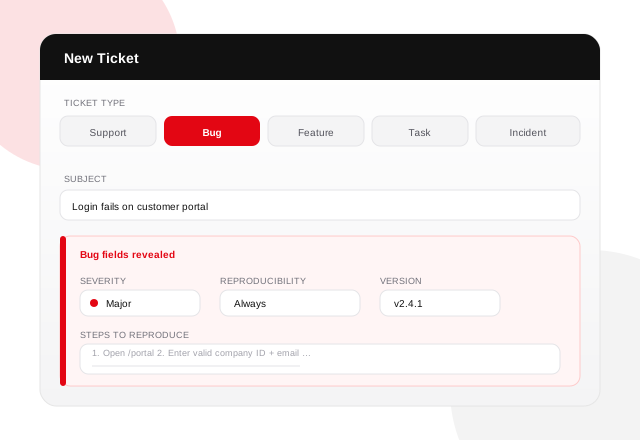
Ticket types with smart, type-aware forms
A Support request stays minimal. Choose Bug and the form progressively reveals severity, reproducibility, affected version and steps to reproduce. Five types cover the whole spectrum:
– Support · Bug · Feature · Task · Incident
– Categories, priorities and assignees
– Projects & versions for issue work
– Resolutions: fixed, won’t fix, duplicate…
Capability
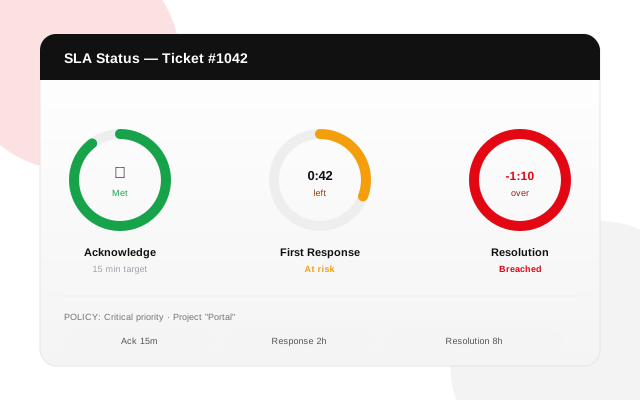
A live SLA engine that never sleeps
Set per-project SLA defaults with per-priority overrides. Acknowledge, response and resolution deadlines tick live, with clear at-risk and breached indicators on ticket lists, the ticket detail and the dashboard.
– Acknowledge · response · resolution timers
– At-risk & breached flags everywhere
– Per-priority overrides per project
Capability
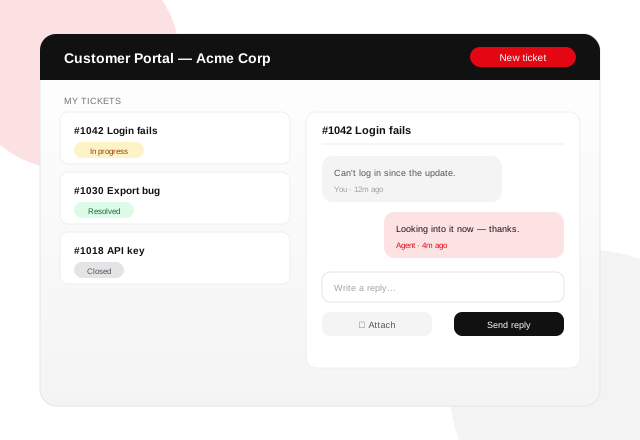
A customer portal your clients will actually use
Each client organisation gets a simplified portal to raise tickets, attach files, follow progress, reply and reopen — scoped strictly to their own data. Less email, fewer status calls, happier clients.
- Per-client organisations
- Self-service create, reply, reopen
- Attachments & email notifications
Capability
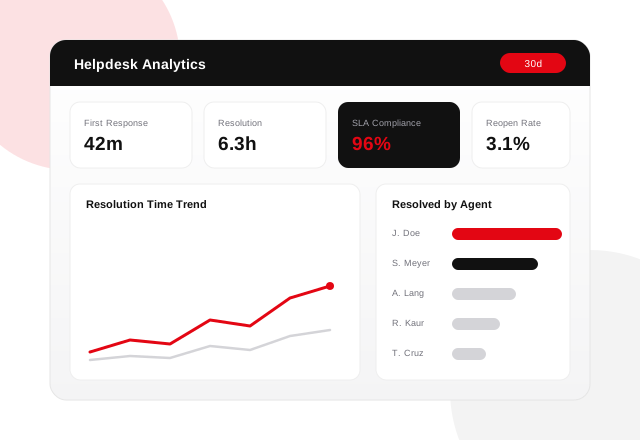
Metrics that drive decisions
Industry-standard analytics for tenant admins: first-response and resolution time, SLA compliance, reopen rate and backlog trends — broken down per agent and per client so you know exactly where to improve.
- First response & resolution time
- SLA compliance & reopen rate
- Per-agent and per-client breakdowns
Capability
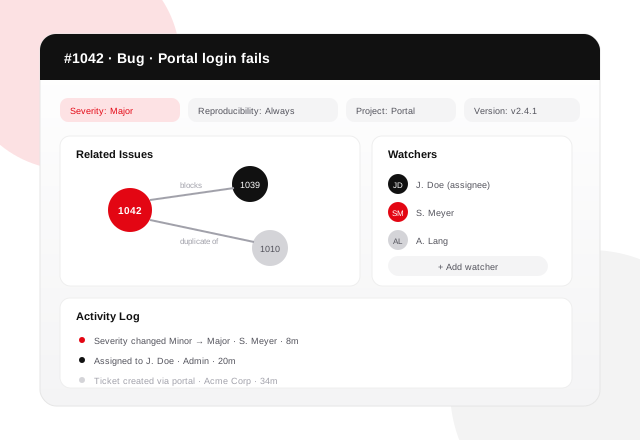
Mantis-style issue tracking, built in
When a ticket is really a defect, CNXTicket has the depth developers expect — without leaving the helpdesk.
- Severity, reproducibility & steps
- Projects, versions & resolutions
- Issue relations & watchers
- Full activity log & audit trail
Capability
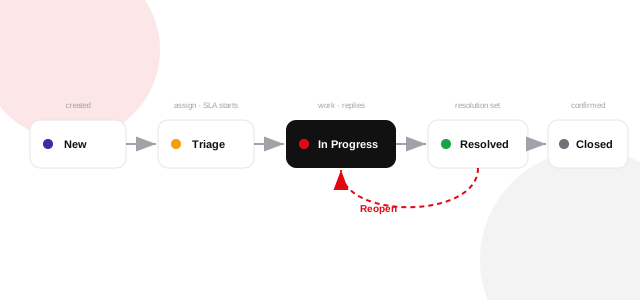
A predictable ticket lifecycle
Every ticket moves through the same clear states — with SLA timers starting at triage and a controlled reopen path.
Capability
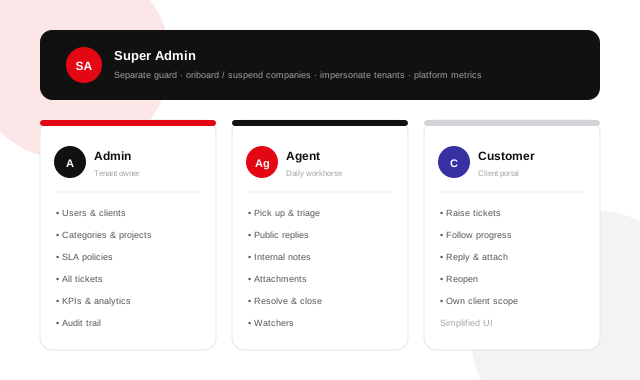
Customizable Roles
Role-based access control via a proven permissions layer — everyone sees exactly what they should, and nothing more.
Everything you need to run support
Internal notes
Collaborate privately with public replies to the customer and internal notes for the team.
Attachments
Add files to any ticket or reply, from both the agent workspace and the portal.
Queued notifications
Ticket updates and password resets are emailed asynchronously via a queue — fast and reliable.
Localized (EN / DE / FR)
UI and emails render in each user’s chosen language — English, German or French.
Feature five
A concise benefit statement describing what this capability does for the customer.
Feature six
A concise benefit statement describing what this capability does for the customer.
“CNXTICKET has given us the ability to streamline our Helpdesk, support and Bug Tracking Processes.”
Angelo Lavides, Solution Delivery Manager — ONETool Solutions, Inc.
FAQ
Frequently asked questions
Is CNXTicket just a helpdesk, or a full issue tracker?
Both. It’s a clean helpdesk with optional Mantis-style issue tracking (severity, reproducibility, steps, projects, versions, relations and watchers) — you use as much depth as each ticket needs.
Can I set different SLAs per client or project?
Yes. SLA policies are set per project with per-priority overrides, so a Critical ticket can have far tighter acknowledge, response and resolution targets than a Low one.
Which languages are supported?
English (default), German and French — for both the interface and email notifications, per user.
Ready to see it in action?
Book a personalised demo, or talk to our team about your requirements.